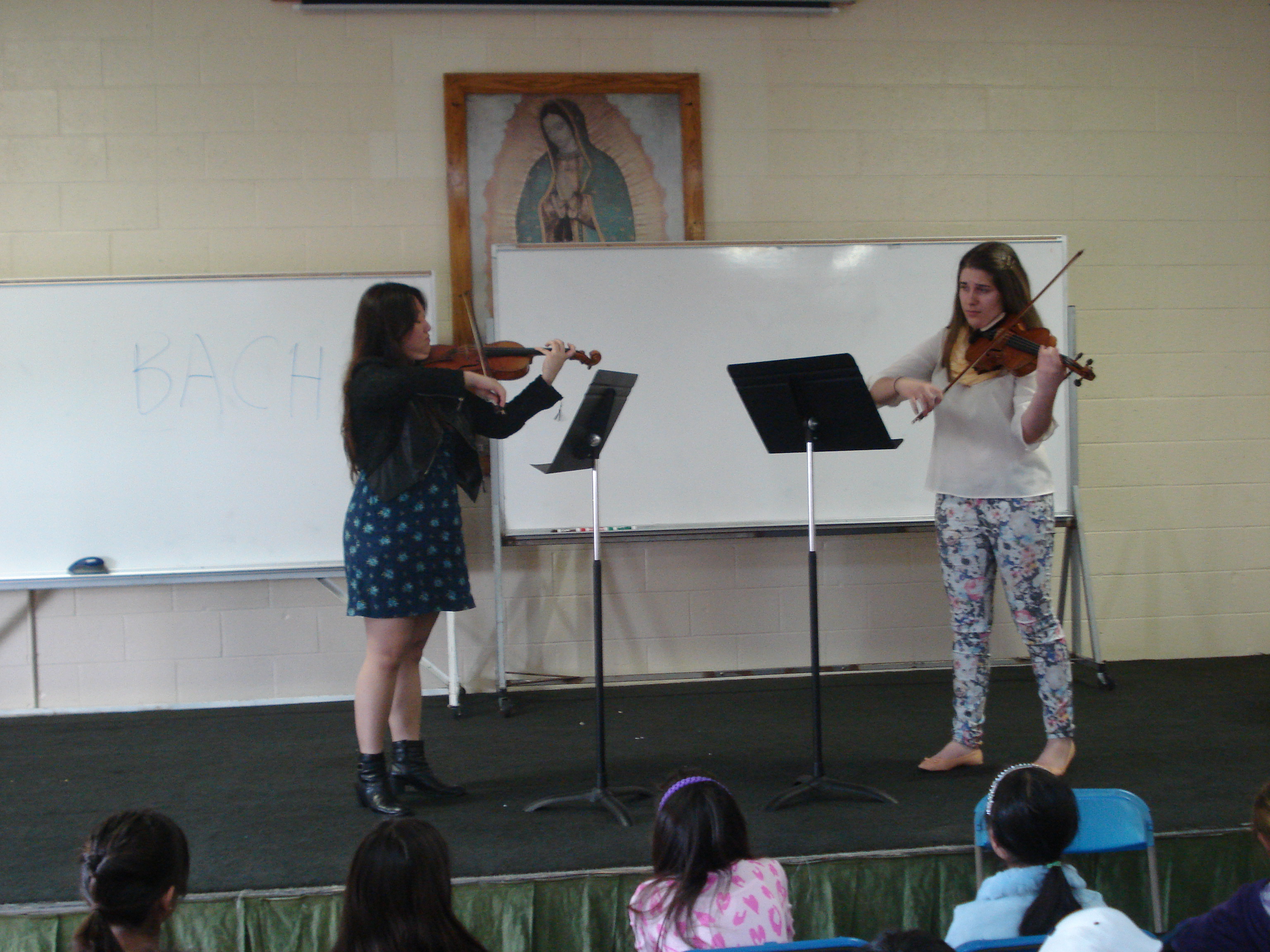
While I am waiting for a couple of bloggers to send me their thoughts on other topics, I thought it might be fun to take a look at some of the people Charlotte Mason admired and whose work she emulated. I'll begin with Francis Bacon's essay On Studies, in which he explains this idea that "Studies serve for delight, for ornament, and for ability." I've never truly understood this concept -- especially the ornamental bit.
After we take a look at Francis Bacon, I'd like us to consider Matthew Arnold, Jan Amos Comenius, and a few other scholars Miss Mason referred to in her Series and Parents' Review articles. There is much to be learned and gleaned from studying those she studied, whether she agreed or disagreed with them. And I want to know what resonates within you. You know, human nature never changes. We may see new inventions, new ideas, and even new political agendas rolling around again and again, but our humanity is still just the same as always with different areas of self-centeredness than other generations but the same basic need for the Holy Spirit's guidance and protection and teaching and leading us into all truth.
____________________________________________________________________________
From Francis Bacon's Of Studies:
STUDIES serve for delight, for ornament, and for ability. Their chief use for delight is in privateness and retiring; for ornament, is in discourse; and for ability, is in the judgment and disposition of business. ...
To spend too much time in studies is sloth; to use them too much for ornament, is affectation; to make judgment wholly by their rules, is the humor of a scholar. They perfect nature, and are perfected by experience: for natural abilities are like natural plants, that need pruning,by study; and studies themselves do give forth directions too much at large, except they be bounded in by experience.
Crafty men condemn studies, simple men admire them, and wise men use them; for they teach not their own use; but that is a wisdom without them, and above them, won by observation.
Read not to contradict and confute; nor to believe and take for granted; nor to find talk and discourse; but to weigh and consider.
Some books are to be tasted, others to be swallowed, and some few to be chewed and digested; that is, some books are to be read only in parts; others to be read, but not curiously; and some few to be read wholly, and with diligence and attention. ...
Reading maketh a full man; conference a ready man; and writing an exact man. And therefore, if a man write little, he had need have a great memory; if he confer little, he had need have a present wit: and if he read little, he had need have much cunning, to seem to know that he doth not.
Histories make men wise; poets witty; the mathematics subtile; natural philosophy deep; moral grave; logic and rhetoric able to contend. Abeunt studia in mores [Studies pass into and influence manners].
Nay, there is no stond or impediment in the wit but may be wrought out by fit studies; like as diseases of the body may have appropriate exercises. Bowling is good for the stone and reins;shooting for the lungs and breast; gentle walking for the stomach; riding for the head; and the like.
So if a man’s wit be wandering, let him study the mathematics; for in demonstrations, if his wit be called away never so little, he must begin again.
If his wit be not apt to distinguish or find differences, let him study the Schoolmen; for they are cymini sectores [splitters of hairs].
If he be not apt to beat over matters, and to call up one thing to prove and illustrate another, let him study the lawyers’ cases. So every defect of the mind may have a special receipt.
________________________________________________________________________
Hear no evil; see no evil; speak no evil; smell no evil?
What resonated with you from this essay? Anything stand out as especially important?
I loved the last section, where he says, "if his wit be not apt to distinguish or find differences, let him study the Schoolmen; for they are cymini sectores [splitters of hairs]."
One thing that I like to do is give students' different books to read based on their needs. In fact, I just did this in a class I'm teaching on the Medieval period of Christendom. Educational methodologists might call this "differentiation." It's this idea that you address each student's areas of lack, in an effort to strengthen them. If we truly view each child as a born person, we will be more apt to do this, I think. It resonates deeply, this idea that we should give what is needed to address a lack. If, for example, a person was vitamin D deficient, we would give them a supplement of that particular mineral, right? We would not blame them for it, nor would we give them vitamin C supplements and expect to see results. So our job as educators is to find the perfect living materials to address each child's need. No easy thing! But necessary. I love it.
What part of this essay leapt out at you? Let me know, okay? I'd love to hear from you!
As many of you know, Science is not my forte. Neither is math. These are the joy of left brain, administrative people, not right brain creatives like me, right? Well, that's not completely true.
Strauss and Brahms
The little known fact about musicians, artists, and creative people in general is that they can be extremely precise, detailed, and mathematical. We are an oddity, I realize! There is this innate determination toward perfection that runs deep within the soul of a creative person. You wouldn't think it's there at all, judging from the artist's loft or the musician's lair. Look at Beethoven! He was a total, disorganized mess!
Or was he?
If you were to look at the exterior scene where he created his masterpieces and his bedraggled clothes and disheveled way of living, yes. (Brahms was also a bit disheveled in dress, as were many famous artists and writers). But take a peek at Beethoven's music, and the complexity will astound you. It's an interior, introverted focused approach. We all have it or at least the possibility of it. So when discussing knowledge of the universe -- such a vast, expansive thing to talk about -- let's not forget that although those obsessed with the Humanities (guilty!) are not typically going to go into science as a career, they can and do study science voraciously.
Here are my somewhat sparse imaginings about Science, the most vivid of my memories from the past 17 years of homeschooling. The first thing I remember doing with our children is ordering caterpillars and watching them build cocoons and become butterflies. Our poor little girls did not want to let their butterflies go free! It was tough to watch them tearfully say goodbye to their precious new friends. But isn't that sort of the point? We hope and pray that our children will engage with what they are learning, and this was one occasion where there was clear engagement, that's for sure! After that experience, they found caterpillars outside and redid the experiment again. This time, the giant brown moth that pushed his way out of the cocoon was quite different than the pretty blue butterflies, yet they were ecstatic! They named him Fred, as I recall. And again, they were fully "on" and engaged.
The next few years we used Apologia curriculum for Science, since I really had less than no clue what living materials to buy. When they did an experiment with eggs in Physical Science, they built bleachers for the rest of the eggs to sit on and watch the experiment along with them. They had drawn faces on all the eggs, named them, and included them in the whole process. Again, totally engaged. Sometimes they videotaped their experiments so they wouldn't forget a moment -- all were precious. Other times, they wrote lengthy dissertations about the topic at hand. As high school approached, we switched from homeschooling solo to joining a co-op and thankfully, I was no longer their inept Science teacher. They retained that same vigor and interest they had begun with so many years prior.
Here is Miss Mason's take on it:
"If we ask, what is knowledge?––there is no neat and ready answer at hand: Matthew Arnold, we know, classifies all knowledge under three heads,––the knowledge of God, divinity, the knowledge of man, known as the 'humanities,' and the knowledge of the physical world, science, and that is enough to go on with. ...
One thing at any rate we know with certainty, that no teaching, no information becomes knowledge to any of us until the individual mind has acted upon it, translated it, transformed, absorbed it, to reappear, like our bodily food, in forms of vitality. Therefore, teaching, talk and tale, however lucid or fascinating, effect nothing until self-activity be set up; that is, self-education is the only possible education; the rest is mere veneer laid on the surface of a child's nature."
So how do we encourage attending and engaging on the part of the student without force-feeding knowledge? Ah, that's the all-important question. I just spent a weekend learning how to teach Science at the Landry Academy's Mom's Retreat in the mountains near Asheville, NC. Beautiful setting for a marvelous group of teachers to pour their hearts' deepest loves out to a thirsty crowd! We pricked our own fingers and found out our blood types, spit into a cup and cultured our own DNA, dissected animals (I did not participate in that part), and learned that finding out how the universe works for ourselves is really the best way to secure knowledge for ourselves.
They gave us the keys to unlock the doors to this knowledge. They taught us about type A and type B antibodies and told us what chemicals they were handing out that would cause our DNA strands to separate from the rest of the solution. In other words, they laid out the feast for us, set the table, and we partook. So our job is laying it all out there for our students. How?
Well, when it comes to Science, I'm not the best person to ask. Still, I think the best education is caught, not taught. Find someone who is an expert in their chosen field and who is excited about it. Bring them into your school and let the kids sit at their able feet and take in knowledge. Want to learn about the planets? Bring in an astronomer. Biology? Contact someone who specializes in infectious disease or something in the medical field.
Jean Henri Fabre
There are living books that cover these areas of specialization, too. I remember when my children were young reading The Life of the Bee by Maeterlinck, Fabre's fantastic books, Madam How and Lady Why, and Arabella Buckley's Fairyland of Science. But Science has changed so much since those books were published that we need to find newer living books to use. We can still use the old conversational ones like Storybook of Science, but it's important to add up to date, informative works that engage while offering hands-on work students can do alone. Let them take in knowledge and let it give them vitality of mind, as food gives us physical vitality or energy.
Here are a few websites and blogs where those more able than I have shared about science:
This week, I'd like to share some of my favorite music with you and share how we developed a love for classical music in our family. Here's the key to it all -- love music in front of your students! Voila! There you have it, ladies and gentlemen. And although it seems like an easy enough task since most learning is caught and not taught, it can be daunting, especially if what you love is, well, a little less than savory. (If your favorite music is punk rock or your favorite band is ACDC or Kiss, this is not going to be easy!)
I had the secret advantage of having been raised by symphony musicians. My parents met while playing for the Rockettes at Radio City Music Hall in New York in the late 1940s. The story goes something like this:
Before the era of air conditioning, it was stifling hot during the summer, and Mom was prone to fainting spells during long rehearsals. So one day, Dad began carrying smelling salts. He kept them on his music stand and whenever Mom started to tip over he would lean over and put the smelling salts in front of her face to rouse her. A match made in Heaven, right? Well, at least it was a story-worthy beginning! From there, they both got jobs with the Dallas Symphony, and we became Texans.
I spent long hours backstage at Fair Park Music Hall in Dallas, listening to classical music in stops and starts during rehearsals (now air-conditioned, which was great since Texas is HOT). After I was tucked in for the night snug as a bug in my bed, my parents always turned on WRR, the local classical music station. Or they turned on my portable record player so I could listen to Tchaikovsky or Benjamin Britten or one of the other record albums I treasured as a child. Sometimes I listened to Songs From France.
So that's the backdrop for what I'm about to say. It's easier to pass along something that comes naturally to you, and listening and loving classical music comes easily to me. That doesn't mean this isn't doable for you, though! In fact, a more step by step approach might be better than my haphazard love affair with this and that -- depending on what I happened to hear them playing that week.
Here are my handy dandy tips: 1) If you live in a city large enough to have a symphony, attend concerts with your children. Often. 2) If you are able to attend live concerts, contact the symphony office and ask them for a study guide, some web links, recordings, samples, and maybe even a tour of the concert hall or venue. Find out what to wear, and lay out special clothes for each child the night before the performance. Make it a special event for them! 3) Go to park concerts whenever possible. Fresh air, fresh fruit, something bubbly, a blanket, some pillows, sunsets, and lilting classical music will help you make a memory. 4) If you live near a university that has a music program, go to as many recitals as you can. They are usually free, and you and your children will learn what individual instruments sound like. You can learn together. And don't forget to congratulate the student afterwards. Recitals are difficult! 5) Listen to your local classical radio station, in the car, at home, or if you have Spotify or iTunes or something else, load in one composer at a time and delve deeply into his or her music, life, times, place, etc. 6) Have Composer Study parties! We used to celebrate certain composers' birthdays by hosting parties where we did a scavenger hunt or a treasure hunt, using clues from the composer's life to lead to the next piece of the puzzle. It's fun. There's always cake. And the children never forget what they've learned because it was a special event where they were in charge of seeking out the information rather than the teacher droning on and on and the student regurgitating the facts on a test at the end of the term. My favorite party was the one where our local opera company was giving away free tickets to La Boheme to anyone who dressed in 1800s costumes. We got all the kids dressed up and got the best seats in the house. It was spectacular. 7) Find the best recordings of the very best composers of all time. There are many ways to accomplish this. Check out the websites I will list at the end of this blog entry for a great head start. Then, listen, listen, listen. Spend some focused time listening to the same piece each day, listening for tone, style, dynamics, musicality, and, of course, for fun. It may help to keep a plackard with the current composer's name written on it beside your school table or desk as you listen so they don't forget who they're listening to. It's easy to do. 8) Talk about music. Talk about how to read music, what sharps and flats are, what the different rests look like. Draw them. Draw notes. Practice clapping rhythms. Create a staff and write your own music. Learn how to play an instrument and practice some simple tunes by your favorite composer. Have a favorite composer. Know who your favorite composer is because you have listened to many and decided for yourself.
If you don't know where to begin, try Mozart, Beethoven, Bach, Brahms, Mendelssohn, Johann Strauss Jr, Rossini, or Tchaikovsky. For opera, Puccini and Verdi. For piano music, Chopin and Liszt. For modern music, Debussy or Stravinsky. I'm leaving out a lot of really special music in between, but this is a great start.
And last, but not least, the song my mother played on the piano whenever she was waiting for everyone to get ready to go somewhere. I am not sure why she sat down and played this song over and over, but she did and it's etched in my heart forever. I can still smell her Windsong perfume and hear her passionate rendition of this lilting Brahms piece. Brahms Intermezzo in A Major, Opus 118, No. 2.
When I was growing up, I always struggled with music theory.
I had a learning disability in math, and there just seemed to be an
impenetrable barrier between me and the advanced mathematics behind how music
theory worked. And it is hard. There are scales, chords, key signatures, and
time signatures, beyond that there are melodic and harmonic minor scales,
strange chords like the N6,Dominant 7, the tritone, picardy third, polychords and polyrhythms,it just makes your head spin!
I heard my friends talk about these things, and felt like
they were equations of Advanced Calculus beyond my understanding.
Music theory was impossible for me to understand until I
learned it through solfege. Suddenly the world made sense. I had the building
blocks to understand whatever weird chord or scale I saw. My understanding of
music skyrocketed and I grew enormously as a musician: composing, transcribing,
arranging, improvising, sight-reading better than I ever had before. But
despite its reputation for being the ABCs of music, there is not much public
information on solfege available.
Almost everyone has been introduced to solfege through Julie
Andrews in “The Sound of Music.” She says it’s the musical ABCs. But unlike
ABCs, music is made up of half steps and whole steps, changing patterns
depending on what scale is being used. In “The Sound of Music,” the children
learn a basic major scale:
Do Re Mi Fa Sol La Ti Do
But this scale is not a bunch of whole steps. It is whole
steps mixed with halfs.
There is a half step between Mi and Fa, and between Ti and
Do. In fact, that Ti NEEDS to be a half step so our ears can hear the note and
WANT it to travel upwards a tiny bit to finish the scale and become Do. It’s
how a major scale works. You can see (and hear) this best on a piano:
But solfege can be used not only in a major scale but other
scales as well. Each solfege syllable can move a half step lower or higher. The
common vowel for a syllable that’s been lowered by half a step is an ‘e’. Like “Me,
Le, Te, Fe.”
So how do you sing a minor scale? A natural minor scale, involves
moving the 3rd , 6th, and 7th notes down a
half step. So instead of Mi, you sing Me. Instead of La, you sing Le, and
instead of Ti, it’s Te.
Do Re Me Fa Sol LeTe Do
12b345b6b78
Before we called a scale a scale, it had another name. The
Greeks called scales “modes” and had seven of them that musicians still use
today. Each of these modes have their own solfege syllables to remember them
by. We already know Ionian. Here is it’s closest relative, the Lydian scale.
Do Re Mi Fi Sol La
Ti Do
123#45678
See, it’s JUST like a major scale, except for ONE note. You
move Fa up a half step, and sing “Fi.”
Because the 4th note in the scale is sharp, I
place it ABOVE a normal major scale (Ionian) in the list of modes. The other
modes use flat notes. Here is a list of them all, as well as the notes that are
altered:
LydianDo
Re Mi Fi Sol La Ti Do
123#45678
If you go to the piano and play this, you’ll notice it
sounds like a 90s film score. Like Titanic, “Back to the Future,”or "E. T.” The raised 4th
brings a sense of comfort and beauty. To me, it brings more inner peace than an
Ionian major scale. This is why composers like James Horner used it to give a
sense of childlike innocence and safety in kids movies like “An American Tail,”
and “Balto.”
I know you're confused right now, but read the article through a couple of times. You'll catch on!
IonianDo
Re Mi Fa Sol La Ti Do(a
normal “major scale”)
12345678
This is the scale everyone learned in “The Sound of Music.”
Notice how I left the numbers at the bottom alone, because these are our
default “scale degrees.”
MixolydianDo
Re Mi Fa Sol La Te Do
123456 b78
Te is a useful syllable in an otherwise major scale. If you
use the notes Do Mi Sol Te (instead of Ti) in a chord, you get a perfect
barbershop 7th chord. This is called a Dominant 7th
Chord, and is an essential part of music
theory. (Actually, all atoms vibrate the notes Do Mi Sol Te. Your atoms do too.
It is theorized that if atoms vibrated the note Ti instead of Te, something
weird would happen like they would explode or disappear or something. So this
chord holds the universe together. No big.)
DorianDo
Re MeFa Sol La Te
Do
12b3456 b78
Just like our normal major and minor scales go together,
Lydian has a minor scale to go with its major one: Dorian. Dorian is like a
natural minor scale without a flat 6 scale degree. That “La” in a Dorian mode
is just as beautiful as the “Fi” in the Lydian mode. (would it blow your mind
to know they are the SAME NOTE? Start on the note Me as your 1, and work your
way up on the piano, There is La, the #4.)
Dorian is the scale used in Ralph Vaughn-Williams’ “Fantasia
on Greensleeves.” Listen to the piece and see if you can hear the Lainstead of Le.
AeolianDo
Re Me Fa Sol LeTe Do
12b345b6b78
Aeolian is the name of the natural minor scale that you’re
used to. Like Dorian is related to Lydian, Aeolian is related to Ionian (our
natural major) in the same way. Use Me as your 1, again, and travel up on the
piano. You’ll find 1, 2, 3, 4, 5, 6, and 7 are all normal like a major scale.
This is because all minor scales start three notes below their major scale
counterparts. Some teachers like to teach solfege using a “fixed do” system,
meaning that your Do stays the same and you start a minor scale 3 notes below
that on La. A fixed Do minor scale will go: La Ti Do Re Mi Fa Sol La.
PhrygianDo
RaMe Fa Sol LeTe Do
1b2b345b6b78
Phrygian is an Aeolian (natural minor) scale with its 2nd
note flatted.This makes it sound
a little gypsy like. It can also make for a really cool theme in a film score.
The “Men in Black” main theme by Danny Elfman is in Phrygian, as is the track “Nice to Meld You,” from Michael Giacchino’s “Star Trek” score.
LocrianDo
RaMe FaSeLeTe Do
1b2b34b5b6b78
No one ever uses Locrian. The addition of a b5 to a scale
that already has a b2, b3, b6, and a 7b makes it sound very unstable, like it
could collapse into random dissonance and tone clusters at any minute. Sorry
Locrian, but no one likes you.
Now that a whole new world of musical possibilities has been
opened up to you, lets try solfeging something a little more complicated than
Do Re Mi. You can use the piano to help you out. How about the theme to “Men in
Black” that I talked about earlier?
Do Do Ra Ra Do Do Ra Ra Do Do Me Me Re Re Ra Ra(it just repeats like that.)
That was in Phrygian. How about something in Lydian, with
the #4?
Do Fi SolDo Fi Sol La
Fi Sol LaFi Sol
Recognize it? Now you can solfege West Side Story!
How about Dorian?
Do MeFaSolLa Sol FaRe TeDo Re MeDo Do Te Do ReTe Sol…
This is probably pretty difficult right now since you JUST
learned all these new syllables. Don’t worry about it, I had to take 4
semesters of Ear Training at Berklee to get all these modes and syllables in my
head! It’s all a matter of practice. But hopefully now you see how solfege
really is an alphabetical tool in the language of music, and how it can be used
to understand complicated things like different scales and complex chords. I
hope you’ve enjoyed this glimpse into the world of musicians and composers, and
that it wasn’t too confusing. This topic can be really hard to explain,
especially on paper. But I encourage you to try this stuff out. Find out which
mode is your favorite (Lydian is mine, and my husband’s is Dorian.) And explore
the new world of music at your fingertips!
~Hannah Hoyt
As an afterthought, yes, there are hand signals that go with
each solfege syllable, but I’ve only learned the ones in Ionian. The hand
signals are fun and useful when trying to visualize each sound, but as a person
struggling with dyslexia, they’ve been pretty confusing and hard to deal with
as well.
If you do want to learn them, though, scroll back up to the beginning of this article and look to your right. There's a link to Kodaly's "Hand Signs" book there and a couple of other music books Charlotte Mason recommended, too.
Don't forget to click on the highlighted words and listen to all the great music in different modes!
Why do we listen to classical music? Here's what one blogger had to say:
"Frankly,
I do not care if listening to Mozart does make me or my kids smarter.
It is an added benefit if it does, I suppose, but I listen to music
because it is simply beautiful—and I hold, the highest form of
beauty—and gives me great pleasure. This is sufficient in itself." from The Imaginative Conservative.
We've talked a lot here at The Winding Ascent about the importance of beauty, and we'll probably talk about it even more as time goes on. I truly believe God created this world for us, gardens, art, and music in particular, as an extension and an expression of Himself, of His glory, of His beauty. Here's what Kristina Zlatareva said in her article "Music -- the Gateway to Eternity":
A K-8 school, St. Anne consists of more than 200 students from which
the majority come from low-income families, who cannot afford to make
art their children’s priority. ... I found out that for
them sitting in a classroom with 8-10 other kids for 1-hour music
sessions deprives them of individual attentionwhich
is needed to unlock their talent and potential. ...
Witnessing this, I decided to organize an informal event, where the
children do not have to feel obliged to sit quietly and listen to music
which they cannot understand, but where they can have their voices heard
and opinions valued. Together with three of my musician friends, I
performed a concert, including pieces for violin, piano and cello from
different classical periods.
Before each performance we talked about the different composers and
history of every piece and at the end we opened a discussion, where the
students had the opportunity to share their individual comments—what
they liked or disliked about the music, how it made them feel or what it
made them think about. Lupita, a violin student, shared her honest
opinion about the beginning of Chopin’s Prelude No. 15, Op. 28: “It’s
like I could see a million bubbles floating in the sky. However, I liked
it only until the loud part started in the middle. It should
have been quieter all the way through, don’t you think?” How funny, I
thought, that Chopin gave title to the Prelude “Raindrop” and Lupita
imagined flying bubbles; and it was not coincidental, because music
inspired a connection between a child’s imagination and an adult’s
artistic vision. Despite the different eras they lived in and the
differences in age and knowledge, I think Lupita felt the music the same
way Chopin did. So, here is a proof that art is timeless—be it a
painting, a poem or a musical piece, it carries an eternal message that
never alters throughout the ages.
She set the scene before they began and had the students narrate at the end. It sounds like Kristina is a Charlotte Mason educator!
Now let's dig into Miss Mason's work again and with beauty in mind talk some more about her vision for music study. This is from vol 6, pp 217-218 (many thanks to Ambleside Online for putting these valuable resources online, to Leslie Laurio for paraphrasing them for us, and to Karen Andreola for publishing the volumes in book form):
"With Musical Appreciation the case is different; and we cannot do
better than quote from an address made by Mrs. Howard Glover at the
Ambleside Conference of the Parents' Union, 1922:––
'Musical Appreciation––which is so much before the eye at the
present moment––originated in the P.N.E.U. about twenty-five years ago.
At that time I was playing to my little child much of the best music in
which I was interested, and Miss Mason happened to hear of what I was
doing. She realised that music might give great joy and interest to the
life of all, and she felt that just as children in the P.U.S. were
given the greatest literature and art, so they should have the greatest
music as well. She asked me to write an article In the Review
on the result of my observations, and to make a programme of music each
term which might be played to the children. From that day to this,at the beginning of every term a programme has appeared; thus began
a movement which was to spread far and wide.
'Musical Appreciation, of course, has nothing to do with playing the
piano. It used to be thought that 'learning music' must mean this, and
it was supposed that children who had no talent for playing were
unmusical and would not like concerts. But Musical Appreciation had no
more to do with playing an instrument than acting had to do with an
appreciation of Shakespeare, or painting with enjoyment of pictures. I
think that all children should take Musical Appreciation and not only
the musical ones, for it has been proved that only three per cent of
children are what is called 'tone-deaf'; and if they are taken at an
early age it is astonishing how children who appear to be without ear,
develop it and are able to enjoy listening to music with
understanding.' "
"She realised that music might give great joy and interest to the
life of all, and she felt that just as children in the P.U.S. were
given the greatest literature and art, so they should have the greatest
music as well."
Did you get that?
Miss Mason put the receiving of great joy ahead of all else when it came to music appreciation. That's really the heart of the matter, isn't it? One has only to peruse Ann Voskamp's A Holy Experience site to understand the importance of joy. And let's face it -- modern society is not terribly concerned with joy. Or beauty. Or anything uplifting and positive. We're seeing world news practically as it happens, and none of it is good. A growing number of us, adults and children alike, are on antidepressant therapy. And yet, look outside your window right now. What do you see? Hopefully a flower. Maybe a blooming rosebush or a plum tree like I do. Is there a butterfly hovering around a milkweed bush? A raindrop resting on a flower petal? Or do you see concrete and hear traffic noise and jets overhead? That's okay, too, because you are resting right where the Father has you. But the joy. Oh, the joy. Where has it fled? I sometimes wonder if the Holy Spirit has hidden himself from view because we have insulted Him by replacing His glory and beauty with ipods, Facebook, traffic jams, Walmart, and concrete. May that never be so! May we welcome the King of Glory, the Creator of the Universe, with open arms and behold the beauty of His holiness. And where might that be found?
Here. Behold, God the Lord from Mendelssohn's Elijah
And here. Mendelssohn's Violin Concerto in E Minor, opus 64 (Hilary Hahn)
And here. In this one, you can listen to Mendelssohn's Hebrides Overture (Fingal's Cave) while watching video of someone's tour of the lower Hebrides (the islands of Mull, Iona, and Staffa off Scotland). It's lovely. And you can hear the waves crashing as Mendelssohn's music plays.
At the end of July (1829), with the concert season over, he (Mendelssohn) left with
his friend Karl Klingemann for Edinburgh, where he conceived the
Scottish Symphony that he would finish a dozen years later. A week
later, on the island of Mull in the Inner Hebrides west of the Scottish
mainland, he wrote in a letter home to Berlin:
“In order to make you realize how extraordinarily the Hebrides have affected me, the following came into my head there.”
The “following” was extraordinary indeed: 21 bars in piano score,
with orchestration indicated, of what we now know as the opening of The Hebrides.
The next day, he and Klingemann took a steamer to the tiny island of
Staffa to see one of Europe’s great tourist attractions, Fingal’s Cave, a
sort of Hibernian Carlsbad Caverns. According to Klingmann, the trip
made Mendelssohn seasick, and judging from the absence of any mention of
it in Mendelssohn’s otherwise detailed travel notebook, the cave made
far less of an impression on him than other scenery.
As spontaneous a stroke of genius as that opening theme is, the
Overture did not come easily. He apparently “finished” at least two
versions, and late as 1832 he was still wrestling with it, writing to
his sister that it did not savor enough of “oil and seagulls and dead
fish.” (from Henry Posner)
And last but never, EVER least when it comes to Mendelssohn -- my absolute favorite from his Elijah, titled If With All Your Hearts.
If with all your hearts ye truly seek me,
ye shall ever surely find Me,
thus saith our God.
Oh, that I knew where I might find Him
that I might even come before His presence.
You may be wondering why that last song is so heart-wrenching for me, and yes, I sat here and cried while listening to it as I do each and every time. Not only did I sing the Elijah back in college at SMU in Dallas (conducted by our wonderful choral director and famed arranger and composer, Lloyd Pfautch). I also remember this song for other reasons. My parents divorced when I was 13, and it was a very messy thing with lots of heartache and hard feelings on all sides, but primarily on my mother's. My dad left her to marry her best friend. It happens. I knew that even as a world-weary young teen. But this time it had happened to MY family. And I was a rather sensitive child, so I lost my way for a season. My mother had recently become a born-again christian, and there is a memory indelibly etched in my mind -- of my mother, in her private quiet time with the Lord, sitting in the dim master bedroom with her autoharp in her arms, strumming quietly and singing mournfully with tears streaming down her cheeks, If With All Your Hearts.
If you want to know what "with all your hearts" looks like, I submit to you my grieving, heartbroken, devastated mom. What an example of faith amid horrible circumstances she was for the shy, gawky teenaged me. I'll never forget that song. That moment. The Elijah. Or Mendelssohn.
Moments of great joy and deep sorrow sting the brain, creating connections that don't disappear over time. This is the power of music to impact a child's life.
Speaking of life and its passion and pain, here's Luciano Pavarotti as Mario Cavaradossi singing as he awaits execution in the opera Tosca. I give you E Lucevan le Stelle.
The Stars Were Shimmering
The stars seemed to shimmer
The sweet scents of the garden,
The creaking gate seemed to whisper,
And a footstep skimmed over the sand.
Then she came in, so fragrant,
And fell into my arms!
Oh! sweet kisses, oh, languorous caresses,
While I, trembling, was searching
For her features, concealed by her mantle.
My dream of love faded away, for good!
Everything's gone now.
I'm dying hopeless, desperate!
And never before have I loved life like this!
And never before have I loved life like this!
In 2004, our children participated in the Choir School at St. Peter's, an episcopal church in uptown Charlotte. Their choir was asked to perform as choirboys in the opera Tosca with Opera Carolina. Little did we realize the impact this participation was going to have on their love of opera and music -- although I did have my suspicions when I caught my little choirboy Hannah crouching in the hallway beneath the speaker while the other kids were in the green room playing cards.
Hannah Hoyt, 2004, Tosca
She
was leaning against the wall in full costume, with her boy's wig and
gray knickers on, crying uncontrollably, listening to Mario sing his last
song, E Lucevan le Stelle. The love affair had begun. And this year
she's a senior vocal performance major at Berklee College of Music, where
she's president of the Opera Club.
Here are a few more pics of the kids from their Opera Carolina days. I can't emphasize enough the beauty and connection a child receives by performing music rather than watching it or listening to it online or on the radio. I hope you'll try getting your students into a choir program or just volunteer to be a supernumerary (like a movie extra but in opera) with a local opera company. The opportunities may be sparse if you live in a rural area, but try a local church choir or a community choir. You never know what beautiful experiences are right around the next bend in the road until you take that first step.
Hilary Hoyt, 2004, Tosca
The
power of music. To jar us. To wound us. To thrill us. To heal us. There
is glorious music in Heaven. And I know the foretaste we've been given
here on earth is only a tiny glimpse of the glory to come.